




Quick Links
What Are Keloid Scars?
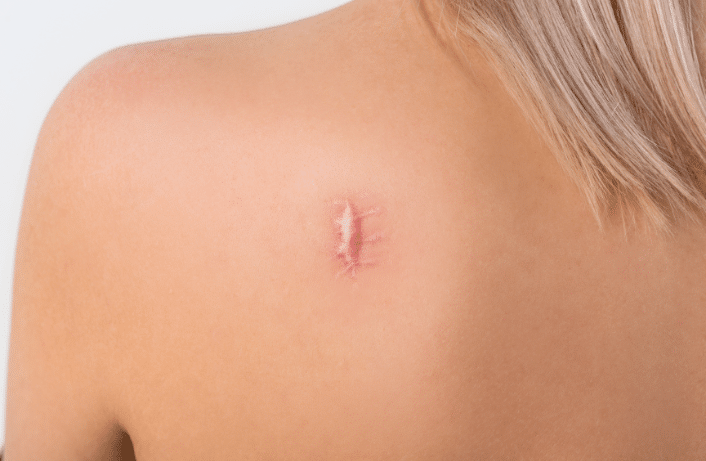
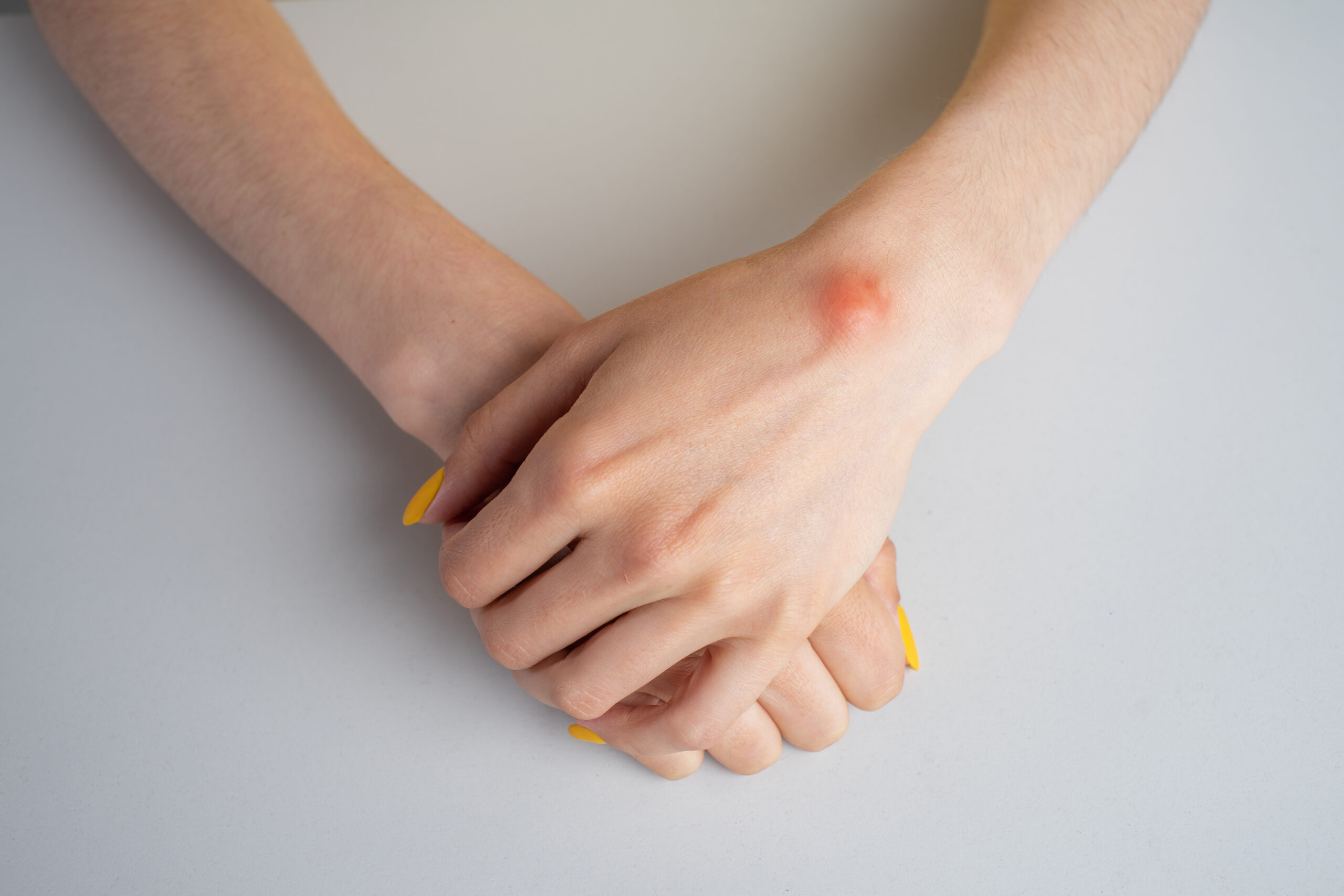
Keloid scars are thick, raised scars that develop after a skin injury or skin trauma. Keloid scars can develop after various types of skin injuries, including insect bites, and they often grow beyond the borders of the original injury. Keloids appear most commonly on the earlobes (after ear piercing), shoulders, cheeks, and middle of the chest. Keloids often have an irregular shape because they can be considered clusters of scar tissue that grow beyond the borders of the original wound. This excess growth is what makes them different than hypertrophic scars.
A hypertrophic scar is another type of raised scar that forms at the site of skin injury, but unlike keloids, hypertrophic scars remain within the boundaries of the original injury and typically improve over time, often resolving within 12 to 24 months. In contrast, keloids tend to grow larger over time and do not regress without treatment.
Keloids are more common in individuals with darker skin tones, especially those of African, Asian, or Latino descent, and they often affect individuals between 10 and 30 years old. Keloids can continue to grow over time, which makes early treatment recommended.
“The surgery center nurses were so nice. They answered all my questions and helped me prepare for the big day. They even called me the next day just to check in on me.”
What Causes Keloid Scars?
Keloid formation is caused by the overproduction of collagen during the body’s natural healing response. Collagen is a protein in the body that aids in the skin’s healing process and helps regenerate connective tissues after burns, body piercings, hair removal, injections, and even minor scrapes. Collagen helps to seal an open wound but too much collagen buildup leaves behind a mass of scar tissue.
Certain skin injuries, such as insect bites, cuts, burns, acne, or piercings, can develop keloids. Genetic factors and a positive family history play a significant role in keloid formation, with predisposed individuals, such as those of African, Asian, or Latino descent, or those with affected relatives, being at higher risk.
There are ways to try to prevent keloid scars, but it can depend on your individual factors.
Treating Keloid Scars
Dr. Falcon relies on corticosteroid injections as an effective treatment for almost all patients bothered by keloids. Corticosteroids break the connective bonds between collagen fibers underneath the skin, breaking up scar tissue to reduce the size of bothersome keloid scars. Steroids also have anti-inflammatory properties that ease swelling, redness, and itchiness sometimes associated with keloid scarring. These injections should be performed after the scar has fully healed. Some doctors give their patients steroid injections prior to surgery as a preventative measure for keloid and hypertrophic scarring.
Patients should expect to receive up to five injections every 4-6 weeks, but each procedure only takes a few minutes and requires no downtime. After each injection, massaging the treated scar can help break up the scar tissue and maximize the effectiveness of your scar treatment.
Keloid Scar Treatment Results
While you may not see noticeable results right away, within 4-6 weeks after your injections, the scar will have softened, and it should have reduced in size. It will continue to flatten and soften for the following weeks. Keloids tend to recur, but you should see significant improvements in the appearance of the scar for years.
Are Keloid Scar Injections Covered by Insurance?
In most cases, keloid scar steroid injections are covered by insurance. It’s always best to double-check with your provider before receiving treatment.
Schedule a Consultation
At Falcon Plastic Surgery, you can rely on Dr. Falcon’s extensive experience in plastic and reconstructive surgery for effective scar revision. Schedule a consultation today at one of our two offices in Natrona Heights and Monroeville, PA by filling out an online contact form. We are located just a few miles outside Pittsburgh, between Greensburg and Butler, PA.

State-of-the art, on site surgical suite located in Natrona Heights, PA
Our suite is certified with the highest level of accreditation by the American Association for Accreditation of Ambulatory Surgery Facilities, Inc. (AAAASF).
Learn More

